Before the Countdown: The Language of Launch
The language of launch turns a waiting room into a story: see how sequence, silence and a final call build tension before anything leaves the ground.
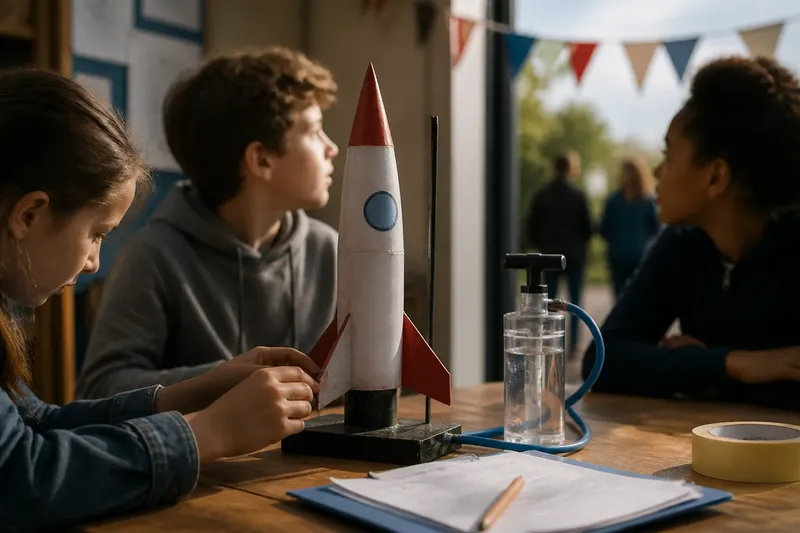
A paper rocket sits on a classroom table while its makers wait for the teacher to call the launch. One child checks the folded fins; another watches the door. Before the model moves, the room already has a plot: preparation, delay, a sequence of calls and an outcome everyone is waiting to see. The language of launch begins in that interval. A countdown does not merely mark time; it gives waiting a shape that listeners can recognise.
That shape is now so familiar that a descending sequence can suggest a launch even when no rocket is present. The appeal lies in its simple dramatic bargain: the audience knows the action is approaching, but not quite when the moment will arrive or what it will bring. To see how the form works, follow one invented scene from its first announcement to its result, then notice what each part contributes.
Why does a countdown feel like a story?
A story usually gives us change to anticipate. A countdown makes that change audible and orderly. Its numbers move towards a boundary, while the listener’s attention narrows towards the event on the other side. Even a short pause can feel charged because the sequence has taught us to expect a next beat.
The form also shares information efficiently. A caller can say that a launch is being prepared, but a countdown tells an audience that preparation has reached a particular kind of moment. It supplies an opening, a middle and an anticipated end without needing a narrator to explain the mood. In fiction, film, radio and public ceremonies, that compact structure can make a technical procedure legible as drama.
Yet the numbers are not the whole language. A countdown depends on what precedes it: checks, reports, permission, or a reason for waiting. It also depends on what follows. The same final call can lead to motion, silence, a delay or a failure to proceed. That uncertainty gives the sequence its tension; the anticipated ending is clear, but its exact form remains open.
How does the invented launch begin?
Imagine that a small community science centre is preparing to launch a water-powered model rocket in its garden. The gathering is fictional, and the scene is meant to show how a countdown can organise attention, not to give instructions for launching anything. The rocket is already set on its display stand, visitors have gathered behind a marked viewing line, and a volunteer named Mara is explaining that the event will begin only after the team is ready.
At first, the language is practical and unhurried. Mara names the roles: one person is checking the schedule, another is watching the audience, and a third is responsible for announcing the next stage. The words establish who is speaking and what sort of authority the voice carries. The crowd need not understand every technical detail; it needs to understand that the event has a process and that the process can pause.
A gust stirs the paper signs, and the team waits. In the story, this is the first meaningful delay. Nothing dramatic has happened, but the audience has been given something to watch: the people at the stand confer, Mara looks towards them, and the announcement does not arrive. The pause makes the next line matter more than it would have if the sequence had begun at once.
What does the waiting do?
Waiting turns attention into participation. People listen for a change in the speaker’s tone, look for a gesture, or try to infer whether the hold is brief or serious. In the science-centre scene, visitors are not simply consuming a spectacle. They are reading the space: the team’s stillness, the wind in the signs and Mara’s choice not to fill every quiet second with commentary.
That restraint matters. If a narrator explains every glance and repeats that the crowd is excited, the audience has little room to feel the delay for itself. A well-shaped pause can do more than another sentence. It lets anticipation gather while preserving a clear distinction between a deliberate dramatic silence and a real uncertainty that calls for information.
The waiting also makes the launch communal. A sequence spoken by one voice can synchronise many listeners. People who arrived separately begin to share a rhythm, even if they do not join in aloud. This is one reason the countdown has travelled beyond technical settings into stories and performances: it gives a group a simple way to attend to the same approaching moment.
When does the countdown start?
In the invented scene, the team signals readiness to Mara, but she does not immediately begin counting. First she tells the visitors that the pause has ended and that the event is entering its final sequence. That brief transition separates preparation from anticipation. Without it, the numbers might seem to appear at random; with it, the audience understands that the story has crossed a threshold.
Mara speaks evenly. The numbers come in descending order, each separated by enough space to be heard. The sequence is familiar, so the audience can predict its direction, but the pace keeps each call from becoming mere background. A fast run of numbers would suggest urgency; a measured pace lets the tension accumulate. Neither choice is universally right. The rhythm should suit the scene’s mood and the audience’s ability to follow it.
At the next call, a visitor’s attention shifts from the volunteer team to the model. That small change shows the sequence working. The words have redirected the group’s focus from the people managing the event towards the object that may soon move. The rocket has not changed, but its meaning in the scene has: it has become the centre of a shared expectation.
How can a pause change the ending?
Just before the final call, one of the team members raises a hand. Mara stops speaking. The pause is not a flourish that hides a known answer; in this fictional scene, it marks a fresh check by the team. The audience cannot tell at once whether the event will continue, so the silence opens a small but genuine question inside the larger story.
The team then signals that it is ready, and Mara resumes. The final call arrives, followed by the model’s release and a brief flight across the garden. The result is modest: the rocket rises, tilts, and comes down within the open area. The scene ends not because the flight is spectacular, but because the waiting has reached an observable outcome. The audience can now respond to what happened rather than to what might happen.
Imagine instead that the team had signalled a further hold. The countdown could stop, and Mara could explain that the launch would not proceed during the present pause. That would be a different ending, not a broken story. A countdown’s promise is not that motion must follow; its promise is that the approaching decision will be made visible. A credible pause can therefore carry as much narrative weight as a successful launch.
What can writers learn from this scene?
The invented launch offers a useful way to read countdowns in other settings, from a fictional spacecraft sequence to a theatre curtain call. Look at the handover from preparation to the spoken sequence, the pace of the calls, the use of silence, and the nature of the outcome. These details show whether the countdown is building suspense, coordinating a group, or simply signalling that an event is about to begin.
- Give the audience a reason to wait. A visible check, a pending decision or a quiet announcement makes the pause part of the scene rather than empty time.
- Make the speaker’s role clear. A countdown feels different when delivered by a calm coordinator, an excited child or an impersonal recorded voice.
- Choose a rhythm with intent. Even spacing can feel ceremonial, while a quicker pace can create urgency; the sequence should match the character and setting.
- Let silence change the situation. A pause can invite attention, show uncertainty or signal that the sequence has stopped. It should not be added simply because the form is familiar.
- Decide what counts as an ending. Motion, delay and cancellation each resolve the immediate expectation in a different way.
What is not worth the effort is adding a dramatic interruption to every countdown. If every sequence stops at the last possible moment, suspense becomes a predictable trick. A small, specific change in the scene—a shift in the speaker’s pace, an unanswered glance, or an announced hold—can be more persuasive than a string of manufactured near-misses.
Which details make launch language work?
Why do countdowns begin at different numbers?
The starting point is a storytelling choice, not the source of the form’s meaning. A sequence feels coherent when its opening signals how much preparation or anticipation the scene wants to show.
Does a countdown need to reach zero?
No. A sequence can stop when circumstances change, and that interruption can be the important event. Reaching the final call matters only if the story has made that boundary meaningful.
Why do audiences sometimes count along?
The descending pattern is easy to anticipate, so listeners can join without being taught every cue. Counting together turns private expectation into a shared performance, even when the spoken words remain with one caller.
Can a quiet countdown still feel tense?
Yes. Tension can come from measured spacing, a withheld explanation or a listener’s awareness that a decision is approaching. Loudness is only one possible way to direct attention.
The language of launch is powerful because it lets a group hear time taking shape. In the science-centre scene, the rocket’s flight matters, but so do the held announcement, the clear handover and the possibility that the team might pause again. That is the useful lesson behind the familiar sequence: before anything leaves the ground, a countdown has already taught its audience how to wait together.